
Calcined Kaolin Is An Excellent Cornerstone in Refractories.
Views: 0 Author: Site Editor Publish Time: 2026-01-10 Origin: Site


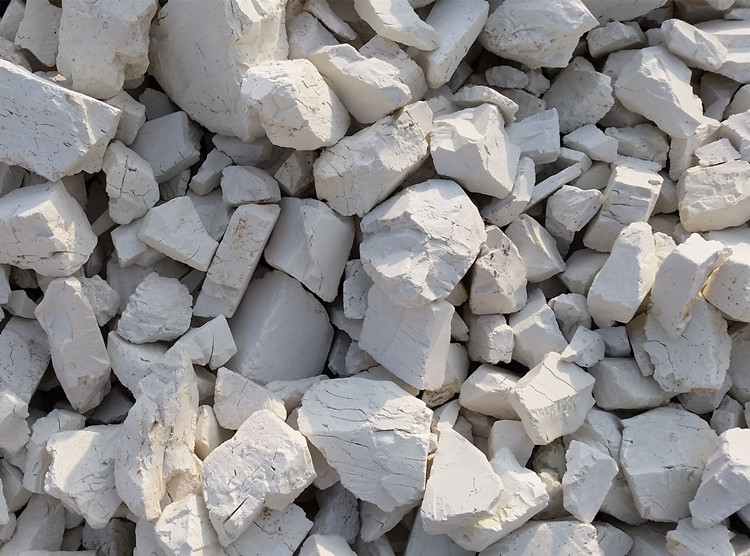
Refractory plays an indispensable role in many fields of modern industry, and calcined kaolin is one of the most valuable raw materials. This paper will deeply discuss the characteristics, application and importance of calcined kaolin in industrial production.
I. Definition and preparation of calcined kaolin
Calcined kaolin is a kind of kaolin product which has been calcined at high temperature. It is also called calcined kaolinite, calcined kaolinite sand or calcined kaolin clinker. It is made by calcining kaolin ore in a high temperature furnace. The calcination process not only removes organic impurities and partial moisture in kaolin, but also significantly changes its chemical composition and physical properties, thus giving it unique properties.
Kaolin ore usually needs to be treated at a high temperature of 1200°C to 1600°C during calcination. This process changed the crystal structure of kaolin, and the main mineral phase changed into mullite (accounting for 35% to 55%), accompanied by the formation of glass phase and Shi Ying. After high-temperature calcination, the color of kaolin is usually pure white, light gray or light yellow brown, with uniform texture and compact structure.
II. Chemical and Physical Properties of Calcined Kaolin
The main chemical components of calcined kaolin are alumina (Al₂O₃) and silica (SiO₂), in which the alumina content is between 40% and 48%. In addition, it also contains a small amount of iron oxide (Fe₂O₃), sodium oxide (Na₂O), potassium oxide (KO) and other impurities. These chemical components give calcined kaolin excellent fire resistance, and its fire resistance usually exceeds 1750 C.
In terms of physical properties, calcined kaolin has the following remarkable characteristics:
High fire resistance: able to withstand extremely high temperatures and not easy to melt or deform.
Physical and chemical stability: it is stable under high temperature and chemical environment, and chemical reaction is not easy to occur.
High density: large volume density and compact structure.
Low porosity: Low porosity helps to improve the strength and corrosion resistance of materials.
Low water absorption: low water absorption, not easy to get wet, suitable for use in humid environment.
Complete calcination: after high temperature treatment, the chemical composition is stable and there is no residual organic matter.
Low impurity content: low impurity content and high purity, which can meet the requirements of high quality refractories.
Pure white: white in appearance, suitable for application scenes with color requirements.
III. Application fields of calcined kaolin
Calcined kaolin has been widely used in many industrial fields because of its excellent properties. The following are its main application fields:
(1) Refractory materials
Calcined kaolin is an important raw material for manufacturing high-quality refractory products, which is widely used to produce the following refractories:
Refractory bricks: including high alumina refractory bricks, clay bricks, insulating brick, etc. These firebricks are used for lining of high-temperature equipment such as industrial furnaces and kilns, and can withstand high temperature and chemical erosion.
Refractory castable: used to repair and build the lining of high-temperature furnaces, with good fluidity and convenient construction.
Kiln furniture: such as crucible, tray, etc., used to bear and support high-temperature materials.
Ceramic fiber products: used to make ceramic fiber felt, ceramic fiber board, etc., with good thermal insulation and high temperature stability.
(2) Precision casting
Calcined kaolin is also widely used in precision casting industry as casting sand and casting powder. Its fine particles and high purity can ensure the surface quality and dimensional accuracy of castings. The particle size range of common calcined kaolin for casting includes 8-16 mesh, 16-30 mesh, 30-60 mesh, etc., and the powder particle size can reach -200 mesh, -270 mesh, -325 mesh, etc.
(3) Ceramic products
In the ceramic industry, calcined kaolin can be used to make various ceramic products, such as ceramic tableware, ceramic handicrafts and so on. It can improve the whiteness, strength and gloss of ceramic products, reduce the firing temperature and save energy.
(4) Other applications
Calcined kaolin can also be used to make insulating materials, glass products, abrasives and so on. In addition, it can also be used as filler in plastics, rubber, coatings and other industries to improve the wear resistance, heat resistance and stability of products.
IV. Production and Quality Control of Calcined Kaolin
The production of calcined kaolin requires a strict quality control system to ensure the performance and stability of the product. In the production process, kaolin ore needs to be pre-treated, such as cleaning, crushing and screening, and then calcined at high temperature. Calcined kaolin needs cooling, crushing, screening and other processes to finally get products with different particle sizes.
In terms of quality control, it is necessary to carry out the following tests on calcined kaolin:
Particle size analysis: ensure that the particle size distribution of products meets the requirements.
Chemical analysis: detect the contents of main components such as alumina, silica and iron oxide.
Physical performance test: including density, porosity, water absorption, etc.
Mineral composition analysis: the content of mullite and glass is detected by X-ray diffraction and other methods.
PH value test: to ensure the chemical stability of the product.
V. Market and Development Trend of Calcined Kaolin
With the continuous development of industrial technology, the demand for calcined kaolin is also growing steadily. Especially in the fields of refractories and precision casting, high-quality calcined kaolin products have broad market prospects. In the future, the production of calcined kaolin will pay more attention to environmental protection, high efficiency and energy saving, and at the same time, it will continue to develop new application fields to meet the needs of different industries.
VI. Conclusion
As an important raw material of refractory, calcined kaolin plays an irreplaceable role in industrial production with its excellent fire resistance, physical and chemical stability and low impurity content. With the continuous progress of technology and the increase of market demand, the application scope of calcined kaolin will be further expanded, providing a solid foundation for the development of modern industry.


