
What Role Does Kaolin Play in Refractory Bricks?
Views: 0 Author: Site Editor Publish Time: 2026-01-10 Origin: Site


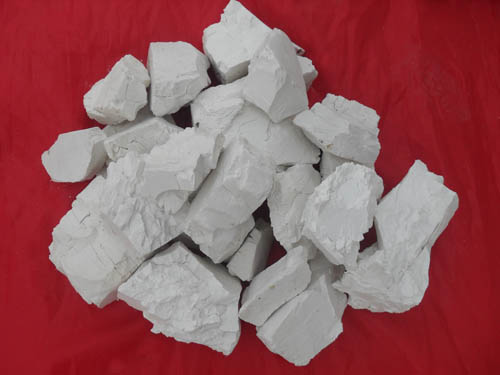
Kaolin plays a vital role in the production of refractory bricks, mainly in the following aspects:
I. Providing fire resistance
Kaolin is mainly composed of kaolinite (Al₂O₃·2SiO₂·2H₂O). After high-temperature calcination, its chemical composition and structure change, resulting in refractory mineral phases such as mullite (3LO 2SiO). Mullite has a very high fire resistance, usually exceeding 1750°C, which can significantly improve the fire resistance of refractory bricks and make them stable in high temperature environment.
II. Strengthening the structural strength of brick body
In the process of high temperature calcination of kaolin, dehydration reaction will occur, and the generated mullite and glass will be filled in the micropores of the brick to form a dense structure. This dense structure can significantly improve the mechanical strength of refractory bricks, so that they can withstand mechanical loads in high temperature environment, such as the impact of heavy objects and the friction of materials in the furnace.
III. Improving the chemical stability of brick body
Alumina (Al₂O₃) and silicon dioxide (SiO₂) in kaolin are the main components of refractory bricks, which can form stable chemical bonds at high temperature and enhance the corrosion resistance of brick bodies. For example, Al₂O₃ in kaolin can react with acidic or alkaline substances in the furnace to form stable compounds, thus protecting the brick from chemical erosion.
IV. Adjust the expansion and contraction of the brick body
Kaolin will undergo physical and chemical changes during high temperature calcination, and its volume will expand and contract to some extent. This expansion and contraction can adjust the thermal expansion behavior of refractory bricks in high temperature environment, so that they can better adapt to temperature changes and reduce cracks and deformation caused by thermal stress.
V. Providing good sintering performance
Kaolin can undergo sintering reaction at high temperature to form dense ceramic structure. This sintering property enables the refractory brick to form a uniform microstructure during high-temperature firing, and improves the compactness and strength of the brick body. At the same time, the sintering temperature of kaolin is relatively low, which can reduce the firing cost of refractory bricks.
VI. Improving the thermal shock resistance of brick.
Mullite phase in kaolin has good thermal shock resistance, which can keep the integrity of brick body under the condition of rapid heating or cooling. This characteristic makes the refractory brick stable under frequent temperature changes (such as the start and stop of the furnace, temperature fluctuation, etc.) and prolongs its service life.
VII. Providing good plasticity
In the production process of refractory bricks, kaolin has good plasticity and can be easily formed and processed. This plasticity makes it possible to customize the production of refractory bricks according to different furnace shapes and sizes to meet various complex application requirements.
VIII. Reducing production costs
Kaolin is a natural mineral raw material with abundant resources and relatively low price. Using kaolin as the main raw material to produce refractory bricks can effectively reduce the production cost and improve the market competitiveness of products on the premise of ensuring product quality.
IX. Summary
Kaolin has many functions in refractory bricks, which not only provides the basic fire resistance of refractory bricks, but also enhances the structural strength, chemical stability, thermal shock resistance and sintering performance of brick bodies. At the same time, the plasticity and cost advantages of kaolin also bring convenience and economic benefits to the production of refractory bricks. Therefore, kaolin is an indispensable and important raw material for manufacturing refractory bricks.


